Essentials of Desert Adaptability Design for Fluid line Systems of Commercial/Engineering Vehicles
Introduction: Desert Challenges for Vehicle Hoses
We all know, in the Middle East, due to more severe weather conditions, the lines of vehicles are facing stricter requirements than conventional ones.Extreme high temperatures in the local area are not uncommon.According to the data from Earth View 360, In July 2024, the Khufu Meteorological Station recorded an extreme high temperature of 51.3℃.
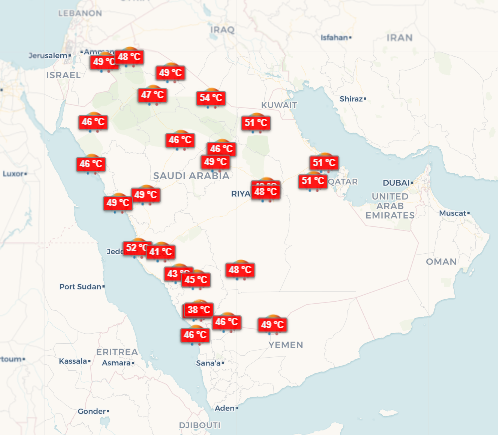
Map of All Time Record High Temperatures in Saudi Arabia
The actual operating temperature inside the engine compartment is usually much higher than the ambient temperature, so the weather resistance design of the line is therefore very important.
High-Temperature Resistance
According to SAE J2064 standard, automotive A/C hose needs to maintain normal function within a temperature range of -30℃ to 125℃, While fuel hoses complying with SAE J30 R9 feature higher resistance to sudden shock impacts. Engineering vehicles operating in the desert hinterland for a long time may experience local temperatures in the engine compartment that far exceed the ambient temperature. Therefore, high temperature resistant elastomers such as FKM (fluororubber) or HNBR should be preferred for hose materials to avoid wall hardening and cracking caused by continuous thermal oxidative aging.
Sand & Dust Erosion Resistance
The wear rate of the outer coating of hoses in wind and sand environments far exceeds that of ordinary conditions. The industry often refers to MIL-STD-810 Method 510 for sand and dust blowing test and IEC 60529 IP5X/IP6X protection level standards to evaluate the product's resistance to particle intrusion and surface abrasion. The outer layer of the hose should be reinforced with high wear-resistant EPDM or composite fabric to reduce surface peeling caused by long-term friction of sand particles
Pressure & Burst Resistance
According to the requirements of SAE 100R series standards, working pressure, burst pressure, temperature resistance range, and minimum bending radius are the core parameters for evaluating the reliability of hydraulic/fuel hoses. High temperature environments can significantly reduce the actual pressure resistance limit of rubber materials, and sufficient margin should be reserved when selecting.
Maintenance & Monitoring
Regularly check whether there are abnormal signs such as leakage, outer skin wear and cracking, hardening and brittleness, bulging and softening in the hoses. The high temperature environment in the desert will accelerate these aging processes, and it is recommended to shorten the maintenance cycle.
In summary, automotive hose selection under desert conditions needs to be strengthened synchronously in three aspects: high-temperature resistant materials, sand and dust abrasion resistant structures, and pressure resistant safety factors, in order to truly adapt to the extreme climate test in the Middle East.
SAE Standards of Auto A/C hose