The Bottom Line: OEM hoses guarantee an exact fit and thermal reliability, but cost 60% more. Premium aftermarket options save money; budget lines risk catastrophic engine failure.
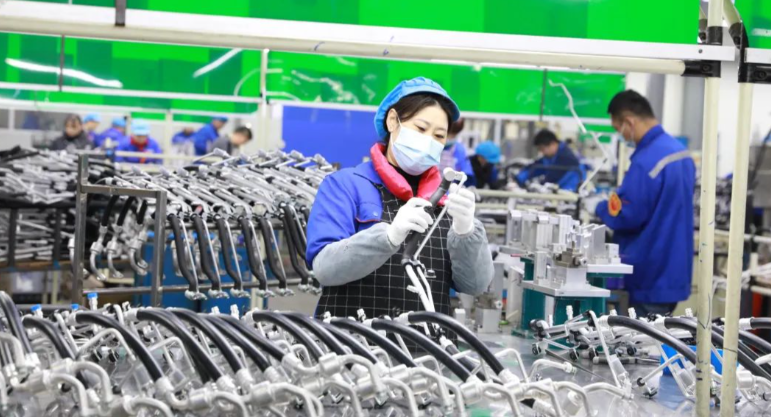
I've recently been working with Chinaust, a joint venture between Lingyun Industrial and Switzerland's GF (Georg Fischer). As one of the world's top automotive hose manufacturers, Chinaust supplies virtually all major global OEMs, including Mercedes-Benz, BMW, Ford, GM, Fiat, Toyota, and BYD.
Notably, they do not produce aftermarket parts, all their orders go directly to the automakers. Even when they do supply replacement parts, they only fulfill orders originating from the OEMs—meaning they are fundamentally still genuine original parts.

Their SQE told me that some of their suppliers specifically make aftermarket parts—mostly exported from China to overseas markets. These aftermarket parts are of poor quality and offer high profit margins, but the orders are too fragmented, so Chinaust isn't willing to take on that business.
1. The Real Cost of Automotive Plumbing
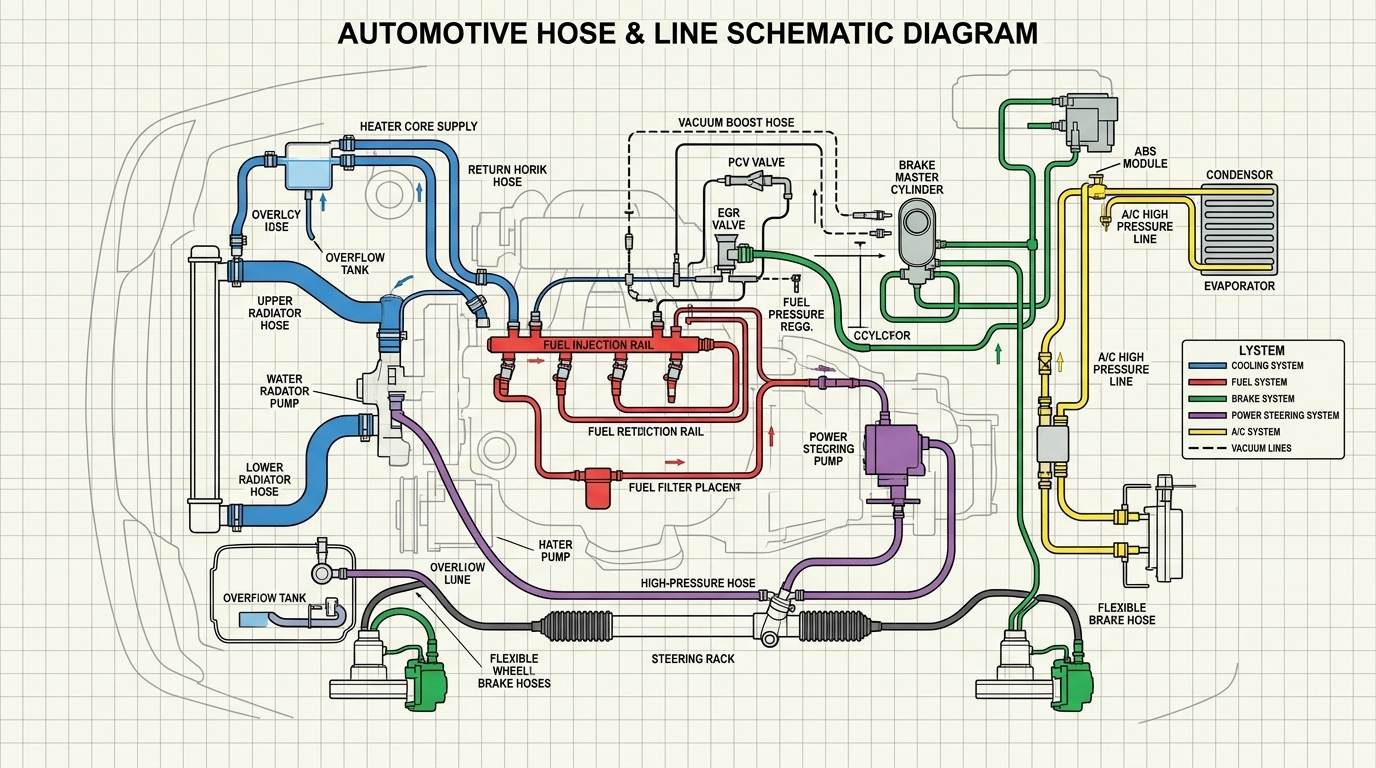
You wouldn’t patch serious frame rot with cheap bondo, nor would you ignore a leaking rear main seal until your oil pan is packed with sludge. The exact same logic applies to your vehicle's plumbing. The global automotive hoses market is expanding rapidly, projected to reach $17.6 billion in 2026.
With vehicles aging, replacing cracked coolant lines, fuel hoses, and AC lines is a routine garage project. But when you are standing at the parts counter, should you swallow the dealership premium or grab the cheaper aftermarket alternative?
2. Data-Driven Comparison: OEM vs. Aftermarket
To cut through the marketing noise, let's look directly at the hard industry data regarding performance and cost.
| Comparison Metric | OEM (Original Equipment) | Aftermarket Parts |
| Price Point | Baseline standard cost | Cost about 60% less than OEM |
| Market Demand | Standardized factory spec | High replacement demand in aging fleets |
| Cooling Reliability | Exact pressure & temperature specs | Highly inconsistent durability |
| Quality Control | 100% exact factory match | Reverse-engineered, quality varies greatly |
3. Three Critical Differences Under the Hood
Understanding why an original factory hose costs more requires looking at engineering tolerances and market mechanics.
- Financial Impact: According to the Property Casualty Insurers Association of America, OEM parts cost about 60% more than aftermarket car parts.
- Engineering & R&D: Aftermarket manufacturers reverse engineer OEM parts to identify their strengths and weaknesses, which allows them to save on initial R&D costs.
- Application Dominance: Radiator hoses dominate the engine belt hose market, meaning high-heat coolant systems are the most common DIY hose repair.
- Thermal Tolerance: OEM cooling system parts meet exact pressure and temperature specs, whereas aftermarket variants frequently suffer from inconsistent durability.
- Fitment Precision: A "universal-fit" aftermarket hose often requires awkward bending, creating dangerous friction against vibrating engine components.
- System Integrity: Modern engines run significantly hotter under tighter clearances; a mere 5% deviation in hose wall thickness can lead to premature blowouts under heavy loads.
4. Which Hoses Belong in Your Garage?
Choosing between the two depends entirely on your vehicle's age, the specific system, and your budget.
- Buy OEM If: You are replacing high-pressure AC lines or intricately molded radiator hoses on a late-model vehicle where engine bay clearances are exceptionally tight.
- Buy Premium Aftermarket If: You are wrenching on an older daily driver where the book value doesn't justify factory prices, but you still want reliable, reverse-engineered quality.
- Avoid Budget Aftermarket When: Fixing vital fluid systems like brake lines or fuel delivery, where a sudden blowout leaves you stranded on the side of the highway.
5. Frequently Asked Questions (FAQ)
- Are aftermarket hoses as good as OEM? While premium aftermarket brands match OE specifications closely, budget aftermarket hoses suffer from lower material quality and inconsistent wall thicknesses, resulting in a higher failure rate under high pressure and heat.
- Why are OEM car hoses so expensive? OEM parts include the costs of strict quality control, proprietary material engineering (like advanced HNBR rubber and multi-layer barriers), and factory licensing fees.
- Can I use an aftermarket coolant hose on a modern car? Yes, provided you choose a reputable aftermarket brand designed to meet exact OEM dimensional and thermal tolerances to prevent rubbing or coolant leaks.
What specific vehicle make and hose system are you planning to tackle next in your garage?